CSMFG supports aluminum forging, aluminum forgings, and forged aluminum parts for OEM buyers that need lightweight strength, reliable grain flow, CNC machining, heat treatment, surface finishing, inspection, and export-ready production support.
For aluminum forged blanks that will be precision machined in the USA or Europe, CSMFG can supply semi-finished forgings with machining allowance, heat treatment notes, and inspection requirements already considered.
Aluminum Forging Services for Lightweight OEM Parts
Aluminum forging is a practical choice when an OEM part must reduce weight without giving up strength, fatigue resistance, or dimensional reliability. Aluminum has a density of about 2.7 g/cm3, roughly one third of steel at about 7.85 g/cm3, while forged aluminum alloys can still provide strong specific strength, good corrosion resistance, thermal conductivity, and non-magnetic behavior.
What is aluminum forging?Heated aluminum alloy is compressed into a die or near-net shape so the metal flows into a stronger forged form.
Why forged aluminum parts?Forging can improve grain flow, fatigue performance, impact resistance, and material yield compared with many cast or fully machined routes.
Best fitUse aluminum forgings for lightweight brackets, arms, levers, housings, fittings, suspension parts, shafts, rings, and machined forged blanks.
Aluminum forgings are common in automotive, machinery, rail, energy, robotics, bicycle, e-bike, and equipment projects where buyers need weight reduction plus dependable service life. In suitable components, forged aluminum can replace heavier steel or cast alternatives and help reduce assembly mass.
CSMFG Production Support
Drawing, CAD, sample, and application review
Aluminum alloy, blank, and forging-route selection
Die/tooling review, preform planning, and sample approval
Forging, trimming, heat treatment, and cleaning
CNC machining, drilling, tapping, finishing, and inspection
Packaging and export support for production orders
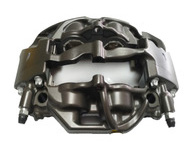
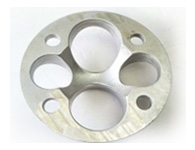
Forged aluminum part for lightweight OEM production.Aluminum forging blank prepared for secondary machining.
Aluminum Forging Process
The strongest aluminum forging projects start before the first billet is heated. Part geometry, load direction, alloy behavior, machining allowance, surface finish, and annual volume all influence whether a forged blank, die forging, extrusion forging, or another forming route is realistic.
Drawing review
Review the 2D drawing, 3D model, application, load path, tolerance stack-up, and surfaces that will need CNC machining after forging.
Material selection
Select an aluminum alloy based on strength, ductility, corrosion resistance, heat treatment response, and forming difficulty.
Billet preparation
Prepare clean billet, bar, slug, or cut blank with controlled size. Surface cracks, scratches, oil, and poor cut faces can become forging defects.
Preheating
Heat the aluminum to a suitable forging window. Many aluminum-alloy forging operations fall around 400-550°C, with die temperature and lubrication also controlled.
Forging
Apply compressive force by die forging, open forging, extrusion forging, isothermal forging, multi-directional forging, roll forging, or another suitable route.
Post-processing
Trim flash, cool under control, heat treat if required, machine critical dimensions, finish surfaces, inspect, and pack for shipment.
Aluminum Forging Methods and When They Fit
Aluminum forging can use several routes. For a buyer, the useful question is not how many methods exist; it is which route fits the part shape, volume, tolerance, material flow, and tooling budget.
Die forging
Best for repeatable aluminum forged parts with controlled shape, good surface quality, and production volume that can support tooling.
Open/free forging
Useful for simple blanks and lower-detail stock preparation where flexibility matters more than final near-net shape.
Extrusion forging
Useful when aluminum must flow through a shaped opening to create elongated or high-density profiles and parts.
Isothermal forging
Useful for temperature-sensitive aluminum alloys or complex parts where stable temperature helps reduce defects.
Multi-directional forging
Useful for complex aluminum components that benefit from more uniform deformation from several directions.
Liquid die forging
Also called squeeze casting in some contexts; useful when pressure-assisted solidification is needed to reduce porosity in certain aluminum parts.
Roll, rotary, and radial forging
Useful for selected shafts, rings, tubes, discs, bars, and continuous deformation work where geometry fits the equipment.
Aluminum Forging Design Rules That Affect Quality
Aluminum forgings need design rules that respect metal flow. Aluminum can be more sensitive than steel to flow-line disruption, folding, sticking, stress corrosion direction, and local filling difficulty. A good design review looks at the parting line, draft, radius, web thickness, rib geometry, and machining stock together.
Flow line
Keep grain flow continuous where possible and align it with the part's service load. Aluminum properties along the flow line can be much better than short-transverse properties.
Parting surface
Choose a parting line that supports ejection, trimming, shallow and wide die cavities, uniform filling, and clean flow. Flat or near-flat parting surfaces are preferred when geometry allows.
Draft angle
Aluminum's friction and die sticking behavior often require more draft than steel. For many aluminum forgings, outer draft of about 3-5 degrees and inner draft of about 7-10 degrees is a practical starting point before final tooling review.
Fillet radius
Larger radii help aluminum flow, reduce folding risk, reduce die stress concentration, and improve life at rib and web transitions.
Ribs and webs
Rib height-to-width ratios should be practical. As ratios rise above about 2.5:1, filling becomes harder; very thin wide webs can also invite folding unless a preform is planned.
Machining allowance
Aluminum forging may need less allowance than some steel forgings because surface oxidation and decarburization behave differently, but final stock should be agreed by drawing and tolerance needs.
Aluminum Alloys, Temperature, and Lubrication
Aluminum alloys do not all forge the same way. High-plasticity alloys are easier to form, while lower-plasticity high-strength alloys may need closed or semi-closed deformation, better lubrication, and closer temperature control. For many aluminum alloy forgings, the forging temperature is much lower than steel and commonly falls around 400-550°C, while die preheat and lubricant behavior must be controlled to reduce sticking and surface damage.
High-plasticity aluminum alloys for easier deformation
Medium-strength forged aluminum alloys where strength and ductility must balance
Lower-plasticity high-strength alloys that need careful process control
Heat treatment when strength, hardness, or dimensional stability requires it
CNC machining after forging for holes, threads, sealing surfaces, and tight tolerances
Surface finishing such as anodizing, coating, polishing, or cleaning when required
Common Aluminum Forging Requests
Buyers searching for aluminum forging suppliers or aluminum forging manufacturers usually need a practical response to a drawing package, not a catalog answer. CSMFG can help compare forging with extrusion, casting, machining from billet, and hybrid routes when cost, performance, and lead time need to be balanced.
Forged aluminum parts
Drawing-based aluminum components for lightweight load-bearing applications.
Aluminum forgings
Production forgings, forged blanks, and semi-finished parts for further machining.
Custom aluminum forgings
Project-specific aluminum alloy forgings based on 2D drawings, 3D CAD, samples, and performance needs.
Aluminum forging process review
Engineering discussion around process route, temperature, flow line, tooling, trimming, heat treatment, machining, and inspection.
Finished forged parts
Forging plus CNC machining, heat treatment, finishing, inspection reports, assembly, packaging, and shipping support.
Aluminum Forging RFQ Checklist
To quote aluminum forged parts accurately, include enough information to judge both forging feasibility and downstream machining. A simple drawing may not show the load direction, cosmetic surfaces, heat treatment, or inspection risk that controls the right process.
Part data
2D drawing, 3D CAD file, revision level, photos, samples, and the current manufacturing route if one exists.
Aluminum forging forms a heated aluminum alloy billet or blank under compressive force so the metal flows into a die or near-net shape. The process can improve strength, fatigue performance, grain flow, and material reliability.
What are aluminum forgings used for?
Aluminum forgings are used for lightweight brackets, levers, suspension components, housings, shafts, rings, fittings, machinery parts, bicycle and e-bike parts, and forged blanks that will be machined later.
Is forged aluminum stronger than cast aluminum?
For many load-bearing applications, forged aluminum can offer better grain flow, fatigue resistance, and impact reliability than cast aluminum, although the best route depends on geometry, volume, and cost.
Can CSMFG supply finished forged aluminum parts?
Yes. CSMFG can coordinate aluminum forging with CNC machining, heat treatment, surface finishing, inspection, packing, and shipment.
What temperature is used for aluminum forging?
The exact window depends on alloy and process. Many aluminum alloy forging operations fall around 400-550°C, with die temperature and lubrication controlled to reduce sticking and defects.
What should I send for an aluminum forging quote?
Send drawings, CAD files, material grade, annual quantity, application, critical features, heat treatment, finishing, machining, inspection, and packaging requirements.
Send your aluminum forging drawing package, alloy grade, annual volume, application, and required finishing. CSMFG will review whether aluminum forging, machining, extrusion, casting, or a combined route is the best fit.