Step 1
Drawing Review & Feasibility Check
We review your part drawings, material, thickness, depth-to-diameter ratio, tolerance requirements, surface finish and production volume. If deep drawing is not the most cost-effective process, we will suggest alternatives such as stamping, spinning, hydroforming, CNC machining or welded fabrication.
Step 2
Deep Drawing Tooling / Mould Design
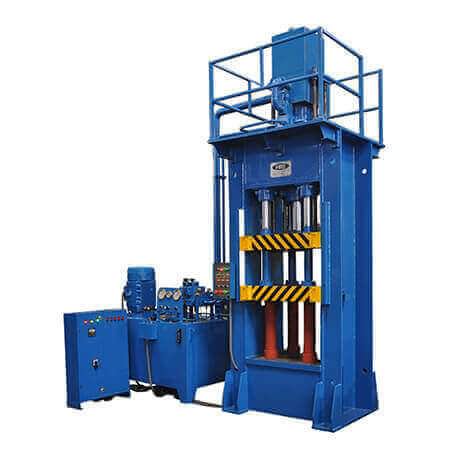
Our engineers design the deep drawing tool, die, punch, blank holder and process sequence. For complex or extra-deep parts, the part may require multiple forming stages instead of a single draw.
Step 3
Prototype & Tool Trial
Before mass production, we verify the forming result, wall thinning, wrinkling, cracking risk, dimensional accuracy and surface quality. Tooling adjustments are made before stable production begins.
Step 4
Multi-Stage or Progressive Deep Drawing
For repeat production, we can use multi-stage deep drawing for very deep shapes or progressive metal drawing to improve production speed, consistency and unit economics.
Step 5
Secondary Operations
After drawing, parts may require trimming, punching, flanging, welding, machining, polishing, electro-polishing, galvanizing, coating, cleaning, assembly or packaging.
Step 6
Quality Control & Export Packing
We inspect critical dimensions, surface quality and functional requirements before shipment. Parts can be packed for export, assembly lines or direct production use.
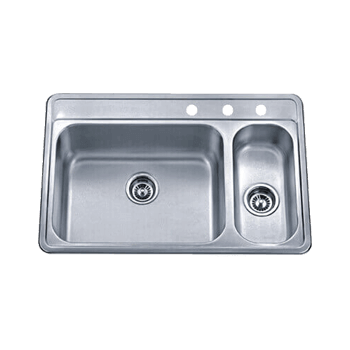
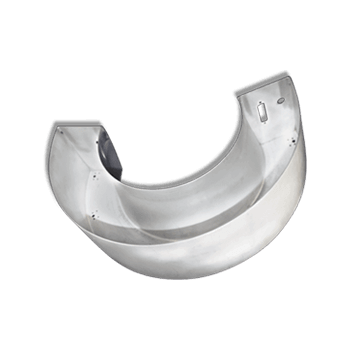
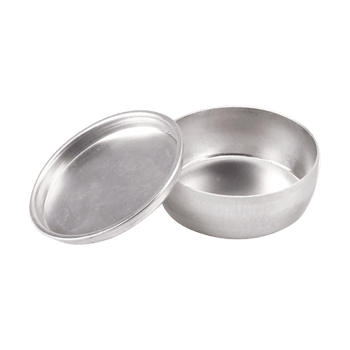
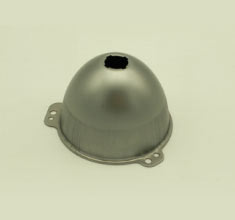
 Deep drawn steel/stainless steel/aluminum/brass parts